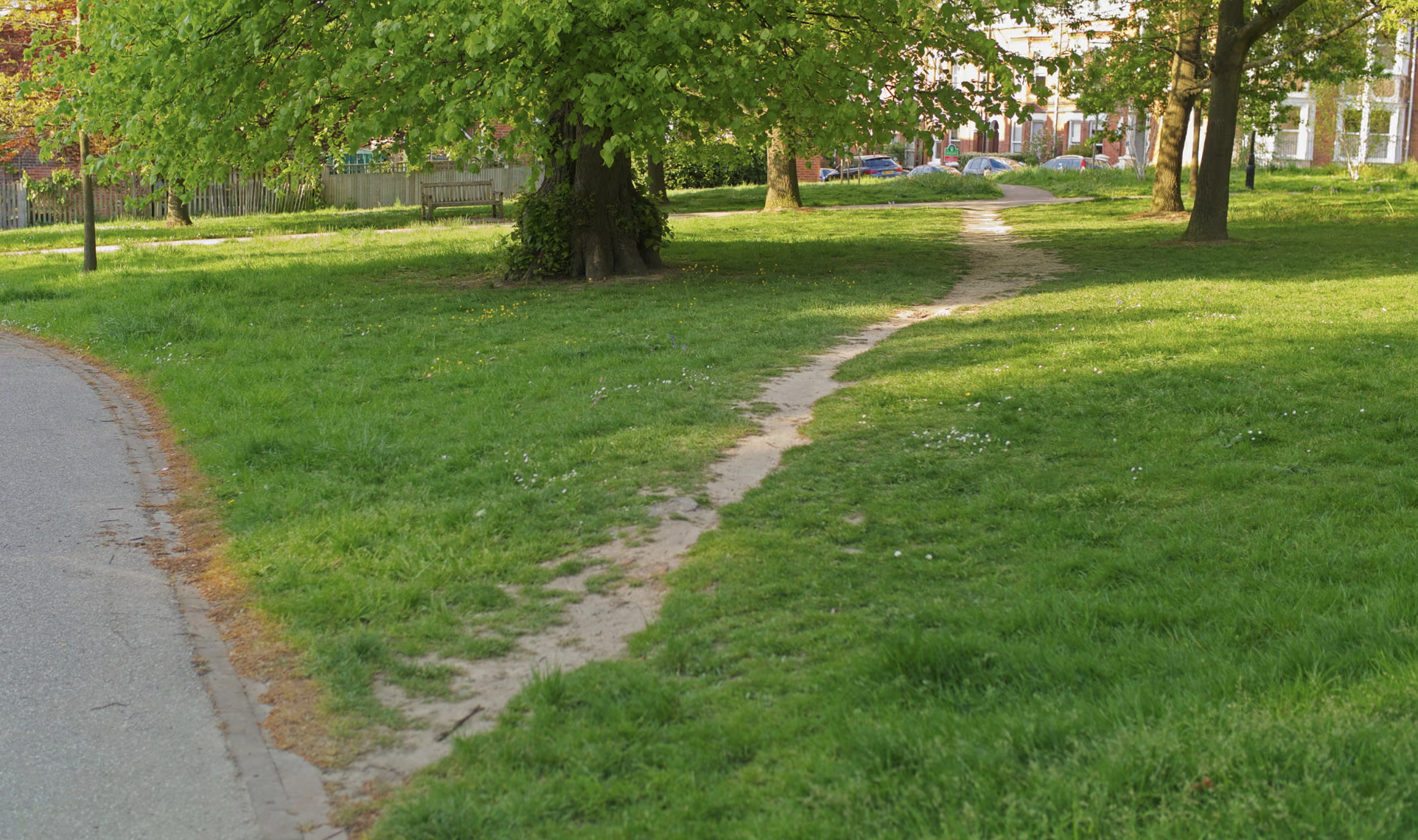
Just Because You Design the Path Doesn’t Mean People Will Take It
Economic development professionals spend a large amount of time discussing groundbreaking projects. They focus on a variety of initiatives like investments, redevelopment opportunities, public-private partnerships, tax incentives, and business attraction strategies. These all matter to long-term growth, but there is a huge force that is shaping the experiences of downtown development: it is a person’s decision to keep going. The built environments may pave the way, but the experience determines whether people follow it.
Districts and downtown economies are defined by the decisions and choices made by the residents, tourists, students, families, workers, and landlords.
- Do I walk a little longer?
- Should I join the gym next door to my office downtown, or workout at home?
- Should I check out that new store?
- Should I come back and bring friends?
Value is created when people choose to move around. These choices are made everyday, continuously, and even subconsciously. As a whole, they can either be the success or failure of a district or downtown.
The Value of Not Turning Back
A visitor comes downtown for a lunch reservation. They arrive early and have some time they need to kill before their reservation, so they decide to walk around and explore the area. Some things that they come across include various vacant storefronts, trash along the sidewalks, tape in windows, hand written signs, poor street lighting, and an unwelcoming environment. Instead of continuing to explore, they turn around and wait at the restaurant. That single decision creates a value leak across the entire district. The restaurant may keep its reservation, but the bookstore, café, retailer, and future events lose an opportunity they never even knew existed. They never discover the bakery, enter the flowershop, share the experience, or bring their friends back.
What appears to be one missed interaction is often a chain of lost spending, lost discovery, and lost affinity.
Economic leaders often overlook these details because they do not appear large enough to justify strategic attention. But value rarely leaks all at once. It leaks through the seams by a series of small frictions: a confusing entrance, a dark sidewalk, an inactive storefront, a missing connection, a closed store, or a reason to turn around…What is foreseeable is avoidable.
What Cities Get Wrong About the Public Realm
For years, cities have looked at sidewalks, lighting, sanitation, and safety as maintenance issues.
But these are not simply operational conditions. They are part of the customer experience, the district brand, the economic performance and the legacy of the place.
Susan McKay, Chief District Management Officer for the Newark Downtown District, states that the public realm should be treated as economic infrastructure. “The public realm is the platform upon which local economies operate. It determines whether people explore or retreat, whether they linger or leave, whether they spend or simply pass through.”
Picture a clean sidewalk that has maintained plants, flower boxes with beautiful flowers, active storefronts, and a warm and welcoming environment. This encourages participation from locals, visitors, and residents.
Experience cannot be added at the end. It must be designed into the strategy from the beginning.
Proximity Opens the Door. Movement Walks Through It
Proximity creates the possibility of value. Connectivity, comfort, and curiosity convert that possibility into economic activity. The success of mixed-use, downtown and special districts is measured in the movement between the uses, not simply the performance of each use in isolation. We may all be on the same journey, but we follow different roadmaps. Successful places create multiple points of entry, discovery, and belonging. The goal is to create a frictionless experience.
A successful downtown is not simply just a destination, but an interconnected network of experiences surrounded by walkable, comfortable, user-friendly public spaces. The more someone walks, the higher chance they will:
- Visit another business
- Make an unplanned purchase
- Stay longer
- Come back again
- Move naturally between uses
- Take a photo/Make a memory
- Eat or drink something
- Interact with a stranger
- Share the experience with others
- Build familiarity and confidence
- Develop an emotional connection to the place
- Become an advocate for the district
This is how isolated transactions become a district economy and how first visits become lasting relationships.
Why a Great Place Is Something You Feel, Not Just See
When people are asked to describe a successful downtown, their responses sound like:
“It feels welcoming”
“It feels exciting”
“It feels clean, walkable, and safe”
“I feel like there is always something to do”
People may not be able to identify every element contributing to that feeling, but they immediately recognize when the pieces work together and when they do not. People do not experience branding, leasing, public space, programming, mobility, safety, and operations as separate disciplines. They experience the cumulative result. Attention to details matter.
This directly reflects the Kayyem Marketing integrated-advisory perspective.
Successful downtowns continuously provide a reason to continue: a pop up shop, another gathering place, a moment of discovery, and another experience worth sharing. The goal is not simply foot traffic. It is a productive movement that increases dwell time, spending, connection, return visits and gets people talking about it.
At Kayyem Marketing and Advisory, this is our expertise. We help downtowns and mixed-use destinations create the kind of experience that brings people back again and again. That’s why it pays to know us before you need us.